Why is school still so hard for your child when they are clearly capable?

I overhaul the school experience for struggling neurodiverse learners in upper high school and university.

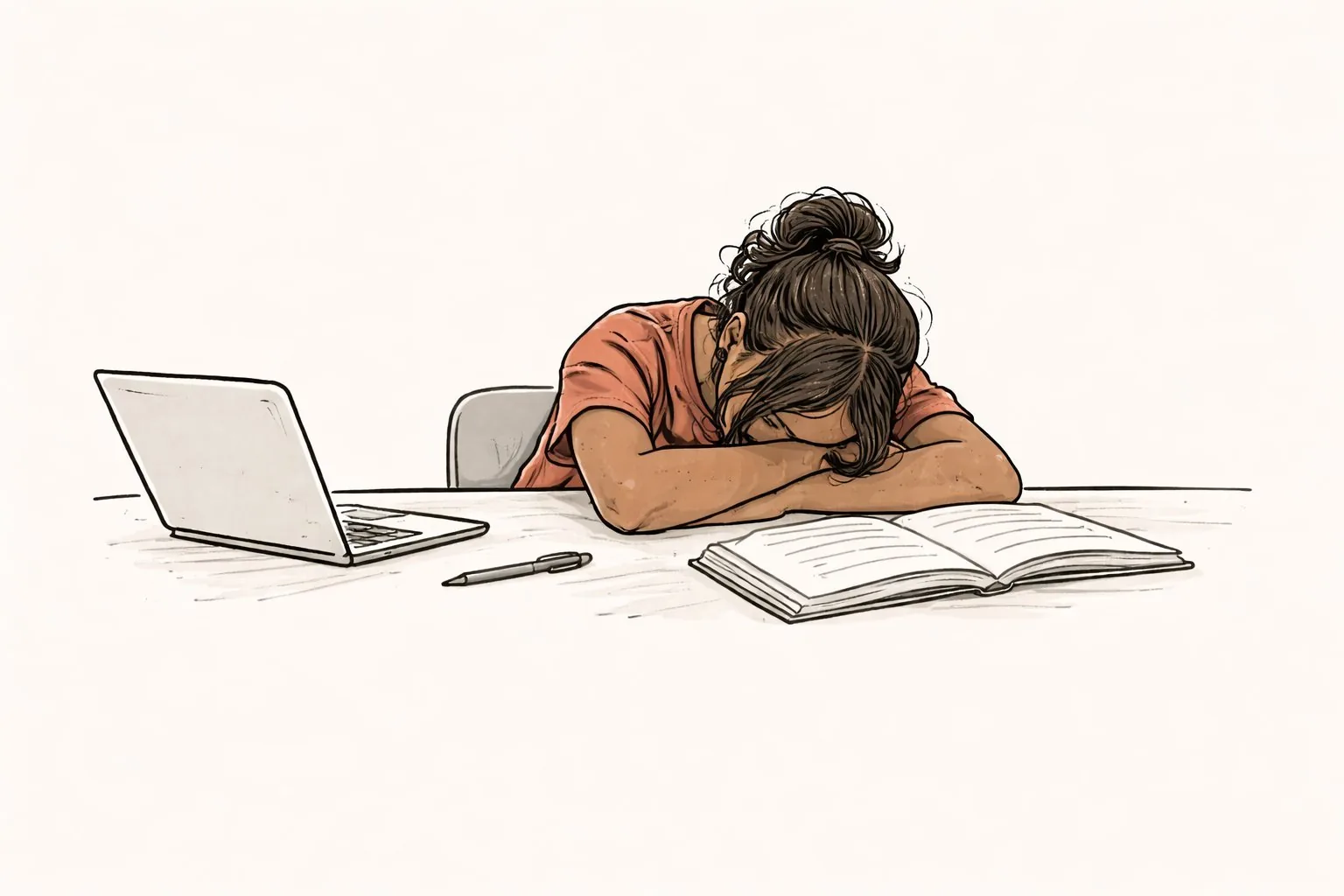
Student with her head down on the desk

Chances are, they are going through school without learning.

They make hundreds of beautiful flashcards to cram in information they can't tell you anything about. They churn through assignments hoping to hit the word count and incorporate enough quotes, not realizing they are actually being asked to have an opinion and back it up. When they study, it never feels like enough. How can it? When you can't see what anything actually means, there is no finish line.
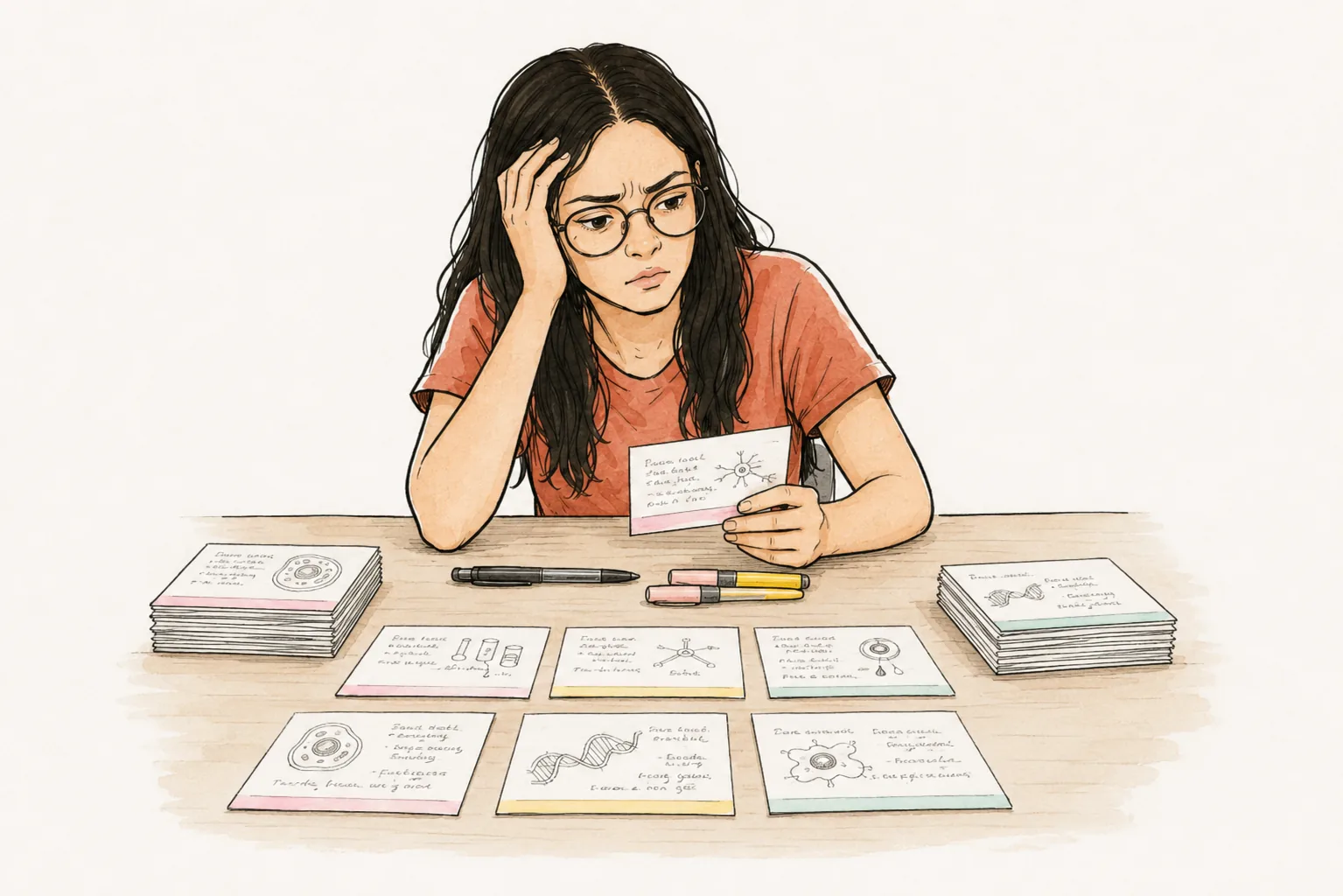

Student looking confused while studying flashcards

They don't know that learning can and should make sense.

Your child's habits are understandable. When material makes no sense, it does not get stored in the brain. The only way your child can hold onto it is memorization, which is never what was intended. The teacher or professor has the understanding of what it is for and why it matters, but that context almost never reaches your child. Without that understanding, your child clings to procedures, formulas, word counts, and hours and hours of memorization.

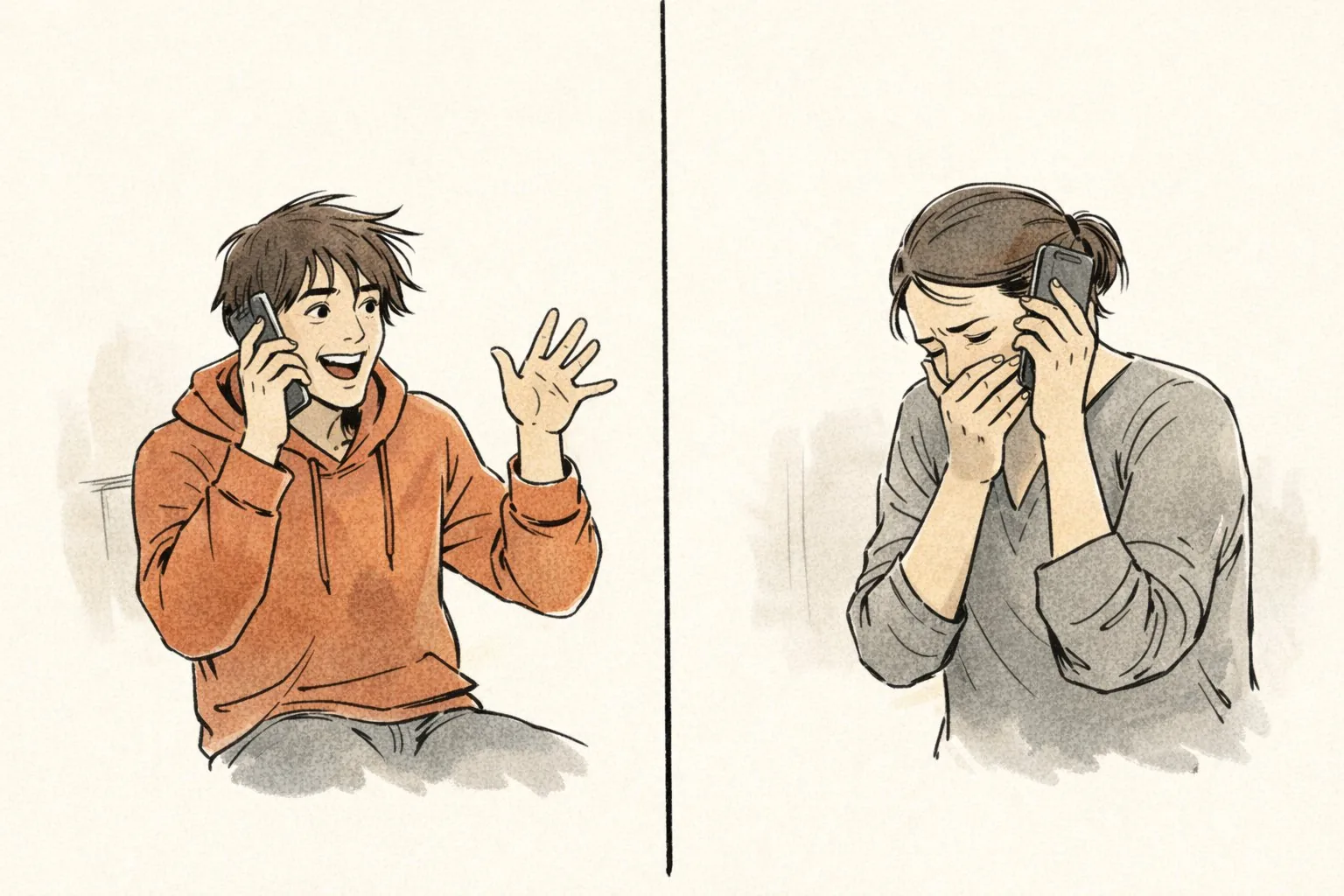
Parent distressed while speaking on the phone

Your child does not need fixing. They need learning set up better.

A person in a wheelchair does not experience immobility when ramps give them access. Your child's challenges don't have the same impact when the material shows up in a form their brain can actually work with.

When that happens, they don't have to fight to learn. They just learn. The struggle was never about capability. It was about what they were being asked to do without the right support.

Student holding his head in frustration at a laptop

When your child can see the goal, make sense of the material, and know they're on track, the grades take care of themselves.

How I work with your child.

Helping them make sense of the struggle

I help your child see why school has become so difficult, where learning is breaking down, and how the strategies they rely on are keeping them stuck.

Establishing what learning should feel like

I work with your child inside their actual material so they can experience what it feels like to understand, know what they are trying to achieve, and recognize when they are on track.

Building structure and support for real learning

Your child’s course material is rebuilt into a genuinely engaging learning experience adapted to what learning means and how it should be demonstrated in that particular course. Guided workflows sequence the material for ongoing comprehension, with real-time clarification and feedback, so your child knows what they are expected to understand and whether they are on track.

Ensuring independence

I make sure your child is using the structures and scaffolds properly to create the learning experience we established together. They know what they are aiming for, can recognize when it is happening, and understand how to use the system independently.

How I use AI.

I use AI to build the scaffolds and structures that allow your child to bypass their information-processing and executive-function roadblocks, so they can quickly engage in meaningful learning experiences.

Bringing the material to life

Course material is often presented in a way that strips out everything that makes it meaningful. The professor understands what matters, what’s fascinating, and what it means to really know it, but that rarely reaches the student. I use AI to translate the material so that it does.

Precise scaffolding to support your child’s distinct learning needs+

I work with your child to understand exactly what their learning needs are, then I build AI tools around those needs. As your child uses them, I’m watching the interaction, catching what the AI misses, and shaping how it supports your child until it’s right.

Removing the orchestration burden+

Your child uploads their coursework and the AI translates it into something sequenced, paced, and organized so they can take it in without getting overwhelmed. They don’t have to figure out what they’re supposed to learn, because going through the experience itself is the learning.

Real-time feedback, so understanding can truly form+

Your child interacts with the material, makes attempts to understand, checks what they think, and hones in on the parts that don’t make sense until they do. Understanding forms through that back and forth, not after it.

Authentic testing+

Your child’s course materials, sample exams, and practice tests are used to build assessments that mirror exactly how they’ll be tested. They walk into their exam knowing they’ve prepared for what’s actually coming.

Hear the difference.

Conventional course delivery

0:00

Rebuilt for accessibility

0:00

I am not a tutor or executive function coach.

Why tutoring is often not enough

Tutoring can help your child understand the material while the tutor is there. Without a structure they can use independently, they often fall back into memorizing, following procedures, and guessing.

How executive function coaching can add to your child’s burden

As a former executive function coach, I know this side of the work well. Coaching can genuinely help your child organize what needs to be done. But when the strategy itself requires planning, initiation, monitoring, and sustained follow-through, it can become another system your child has to manage.

Parent and child speaking happily by phone

What changes when your child has access to meaningful learning.

Years of shame lift as your child learns they were always capable.

They stop wasting time grinding and memorizing.

They have an appetite for real learning. They want to make sense of material.

They start understanding when what they’re doing isn’t leading to learning, and they switch gears.

They have more tolerance and resilience when things aren’t immediately clicking.

Grades skyrocket.

About Richard.

I’ve spent 17 years working with students who are clearly capable, but still cannot get school to work.

The one thing I want you to know is that there is nothing wrong with your child. There has never been anything wrong with them. Once we fix the situation they are trying to do school in, everything changes.

Let’s get in touch.

From parents and students.

“If your kid has any learning disability you haven’t been able to understand for years, this guy is a magician. He developed a personalized AI tool to help my child learn. It’s not ChatGPT. And it’s magic.”
— A.S.
“You can articulate what’s been going on with my kid better than anyone she’s ever worked with. Everything you’re saying, I’m just nodding my head up and down.”
— D.M.
“Her executive function coach made her feel stupid every single time. With Richard, after each session she would say, ‘Oh yeah, Richard and I came up with this thing, and now I know how to do that.’ She’s advocating for herself now.”
— J.K.
“The results have been absolutely remarkable. The improvements in my son’s general executive functioning, his approach to school and to his everyday tasks have been life altering.”
— R.P.
“It’s the one experience I’ve had where I won’t say that we wasted our money because you can actually see the progress really fast. I wish I had known about this in grade five or six.”
— L.H.
“School was always a struggle for me, especially transitioning to university. I was trying so hard, but nothing stuck. I’ve learned how my brain works, built systems that fit me, and now I’m getting straight A’s.”
— W.S.
1 / 6

Examples of my work with students.

Student engaged at a laptop

Matthew

Matthew is a brilliant thinker, but dense assignment instructions and open-ended prompts taxed his processing speed and working memory, sending his brain into overload before any real thinking could begin. He would spend hours trying to form a thesis without knowing what he was actually trying to argue.

I built him a conversational tool that would populate a mind map as he spoke out his ideas, so he could see his argument take shape in real time.

In his words
0:00

Monica

Monica was treating her stats course as a set of formulas to memorize. She had no idea when to use one over another or what any of them actually meant.

I built her an interactive study system she could upload her slides into that forced her to build the understanding herself. It wouldn't move forward until she could demonstrate she actually knew the material. She went from at risk of failing her midterm to 90%.

In her words
0:00

Questions parents ask.

Isn’t this just ChatGPT?

ChatGPT is a general-purpose tool. It has no idea what your child needs to learn, what understanding looks like for their specific course, or how to sequence information for how their brain processes it. What I build is a learning ecosystem designed around your child’s actual courses, calibrated to what their professor actually cares about, and structured to invite genuine engagement.

ChatGPT on its own will happily summarize, explain, and produce flashcards. All things that feel productive but fail to encode learning. The system I build puts your child in situations where they’re figuring things out, explaining their thinking, and making decisions with the knowledge. That’s what encodes.

Will AI do the work for them?+

No. And this is critical. Most AI tools, used without structure, will fill in conceptual gaps automatically. The student appears competent, but nothing encodes. When the scaffold disappears, on the exam or in the next course, everything collapses.

This system uses AI differently. The AI asks questions, it does not give answers. It locates where understanding breaks down and builds from there. Your child has to prove their understanding at every step. The AI cannot hallucinate their competence.

What ages do you work with?+

University and upper-year high school students. The system is built for students navigating complex course material who are capable of far more than their grades suggest.

If your child has been lost in school for way too long, let’s get in touch.